

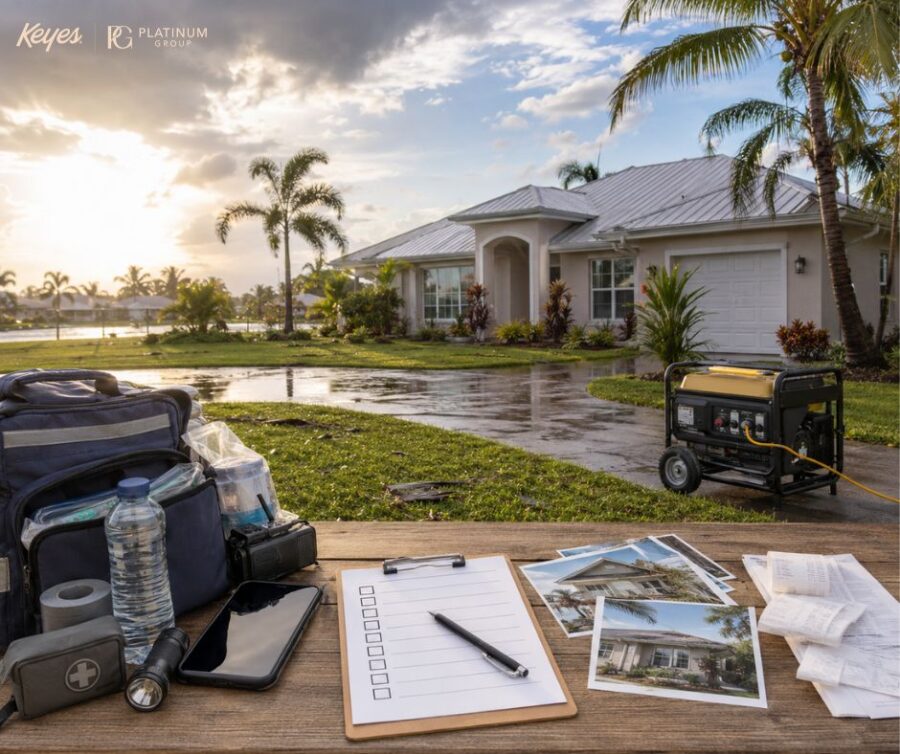
Most hurricane preparation focuses on what to do before impact: shutters, supplies, fuel, and evacuation routes. But recovery can be just as stressful—especially when you are making decisions without power, reliable service, or easy access to important information.
A simple after-the-storm plan can help you act faster and avoid unnecessary confusion.
Document Your Home Before You Need It
Take clear photos and videos of every room, major appliances, the roof, windows, pool area, landscaping, and exterior structures before storm season. Save copies in cloud storage so they remain accessible if your devices are damaged. Keep receipts, permits, warranties, and invoices for improvements such as a new roof, impact windows, shutters, generators, or remodeled spaces.
Build Your Recovery Contact List
Create a list of trusted roofers, electricians, plumbers, tree services, restoration companies, your insurance agent, and your association or property manager. Verify contractor licenses before work begins, and be cautious of anyone demanding large upfront payments after a storm.
Decide where you could stay if your home becomes unsafe. Include pets, medications, transportation, and accessibility needs in that plan.
Plan for Power and Communication
Portable generators must remain outdoors, at least 20 feet from doors, windows, and vents. Store fuel in approved containers and never refuel a hot generator.
Choose one family contact outside the affected area, establish a check-in plan, and keep important numbers written down in case phones lose power.
Recovery is easier when important decisions are made before the pressure begins. I can help you organize your home information, connect you with trusted local resources, and prepare your property for whatever Florida’s storm season may bring.